All-on-6 risks and complications
Every surgical treatment carries risk. Knowing the common problems, and what makes them more likely, helps you lower them.
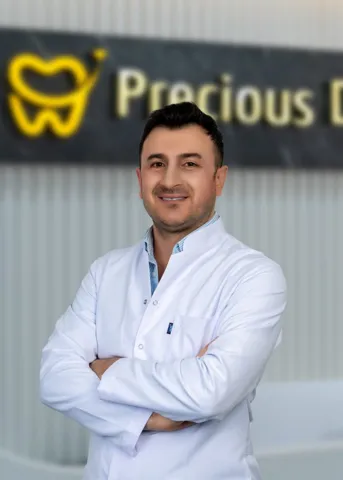 Medically reviewed by Dt. Hüseyin Yavuz Özbek, implant surgeon · Updated October 2026
The main risks of All-on-6 are an implant failing to bond with the bone, infection of the gum and bone around implants (peri-implantitis), and wear, chipping or loosening of the bridge. A review summarised by the British Society of Periodontology found peri-implantitis in about one in five patients over their lifetime. Smoking, diabetes and a history of gum disease raise the risk; daily cleaning and regular check-ups lower it.
The main risks
| Risk | What it means | When |
|---|---|---|
| Early implant failure | An implant doesn't fuse with the bone | Weeks to months after surgery |
| Peri-implant mucositis | Inflamed gum around an implant, without bone loss; reversible | Any time |
| Peri-implantitis | Infection with bone loss around an implant; can lead to its loss | Usually years later |
| Bridge problems | Chipping, fracture, wear, loose screws | Any time |
| Surgical risks | Bleeding, swelling, infection, bruising; rarely nerve or sinus problems | Around surgery |
The British Society of Periodontology describes both early failure, where implants don't anchor in the bone, and late failure, where, like natural teeth, they develop gum disease.
Peri-implantitis: the numbers
A systematic review and meta-analysis of more than 13,000 patients, summarised by the BSP, reported at the patient level:
| Time with implants | Peri-implant mucositis | Peri-implantitis |
|---|---|---|
| 5 years | About 46% | About 12% |
| 10 years | About 61% | About 14% |
| 20 years | Limited data | About 22% |
Mucositis, the early, reversible stage, is common. Catching it early, with better cleaning and professional help, is how peri-implantitis is prevented.
What raises the risk
- A history of periodontitis (gum disease).
- Diabetes, especially if not well controlled.
- Smoking.
- Poor cleaning and missed check-ups.
- Bone-strengthening medicines: the NHS says there's a very small chance of jawbone damage when having implants while taking alendronic acid.
The BSP found age and sex had no consistent influence.
Does six implants lower the risk?
A 2024 meta-analysis found no significant difference in technical or biological complications between four and six implants in the upper jaw, but less bone loss around the implants with six. More implants also means a back-up if one has a problem. See why six implants.
How to reduce your risk
- Have gum disease treated and stable before implants.
- Stop smoking, ideally well before surgery.
- Get diabetes under good control.
- Tell your dentist about every medicine, including past bone injections.
- Insist on a 3D scan and a written plan.
- Clean under the bridge daily and keep regular check-ups. See cleaning and care.
Warning signs
The BSP lists these as signs of complications to report to your dentist: looseness of an implant or bridge; pain, bleeding or a bad taste around an implant; chipping, fracture or wear of the bridge.
Thinking of treatment abroad? Aftercare and follow-up from the UK are covered on All-on-6 in Turkey.
Common questions
What happens if an All-on-6 implant fails?
It depends on when and how many. With six implants, the bridge can sometimes stay in use while one is treated or replaced. Your dentist will assess whether the remaining implants can support the bridge.
How common is peri-implantitis?
A large AO/AAP review summarised by the British Society of Periodontology found about one in five patients develop peri-implantitis: around 12% at five years, 14% at ten years and 22% at twenty years.
Can peri-implantitis be treated?
Yes, but it can be challenging. The BSP says treatment often includes better home cleaning plus professional cleaning by your dental team. Early treatment works best.
Is All-on-6 riskier than dentures?
It involves surgery, so it carries surgical risks that dentures don't. Dentures have their own problems, such as looseness and sore spots. Compare both in our All-on-6 vs dentures guide.
Sources
- British Society of Periodontology — Patient FAQs: dental implants (complications, early and late failure)
- British Society of Periodontology — Research Corner: prevalence, incidence and risk factors for peri-implant diseases (AO/AAP systematic review)
- Oral Health Foundation — Understanding dental implants (peri-implantitis)
- NHS — Alendronic acid: common questions (dental implants)
- Sharaf et al. (2024) — Four or six implants in the upper jaw: systematic review and meta-analysis. Heliyon
Checked October 2026. Where we give our own view as a clinic, we say so.
Ask a dentist-led team, without the sales pitch.
Tell us what you're considering. A real person replies in plain English, and will tell you honestly if All-on-6 isn't the right step for you.